Soft-Wash Roof Cleaning
Original clay barrel tile, concrete tile, shingle and flat roofs cleaned by low-pressure chemical application. Removes algae, mold and lichen without breaking tile that cannot be replaced.
Soft-wash roof cleaning, driveway washing, and house washing — based right here in Lake Worth, from historic downtown bungalows to Intracoastal homes.
Lake Worth is older than almost everything around it. The town incorporated in 1913, filled in through the 1920s boom, filled in again after the war on the G.I. Bill, and the result is a city where a 1924 Mediterranean Revival house, a frame vernacular cottage, a 1950s CBS ranch and a 1970s Intracoastal condo sit within four blocks of each other. Six historic districts are designated here — Old Town, Old Lucerne, Northeast Lucerne, Southeast Lucerne, South Palm Park and College Park — and much of what stands on those blocks is original material.
That changes the cleaning job in a way the suburbs west of here never require. Original clay barrel tile, soft lime-based stucco, wood siding, single-wythe masonry and hundred-year-old glazing putty do not tolerate the pressure a 2004 tract house shrugs off. We soft wash: low pressure, the right chemistry, a rinse.
We work throughout Lake Worth, including College Park, Parrot Cove, the Lucerne districts, South Palm Park, Tropical Ridge, Royal Poinciana, Mango Groves and downtown Old Town. Residential, commercial and multi-family.
Lake Worth is officially named Lake Worth Beach today - and we serve the whole area, from downtown Lake Worth Beach to the surrounding Lake Worth neighborhoods and the Lake Worth Corridor.
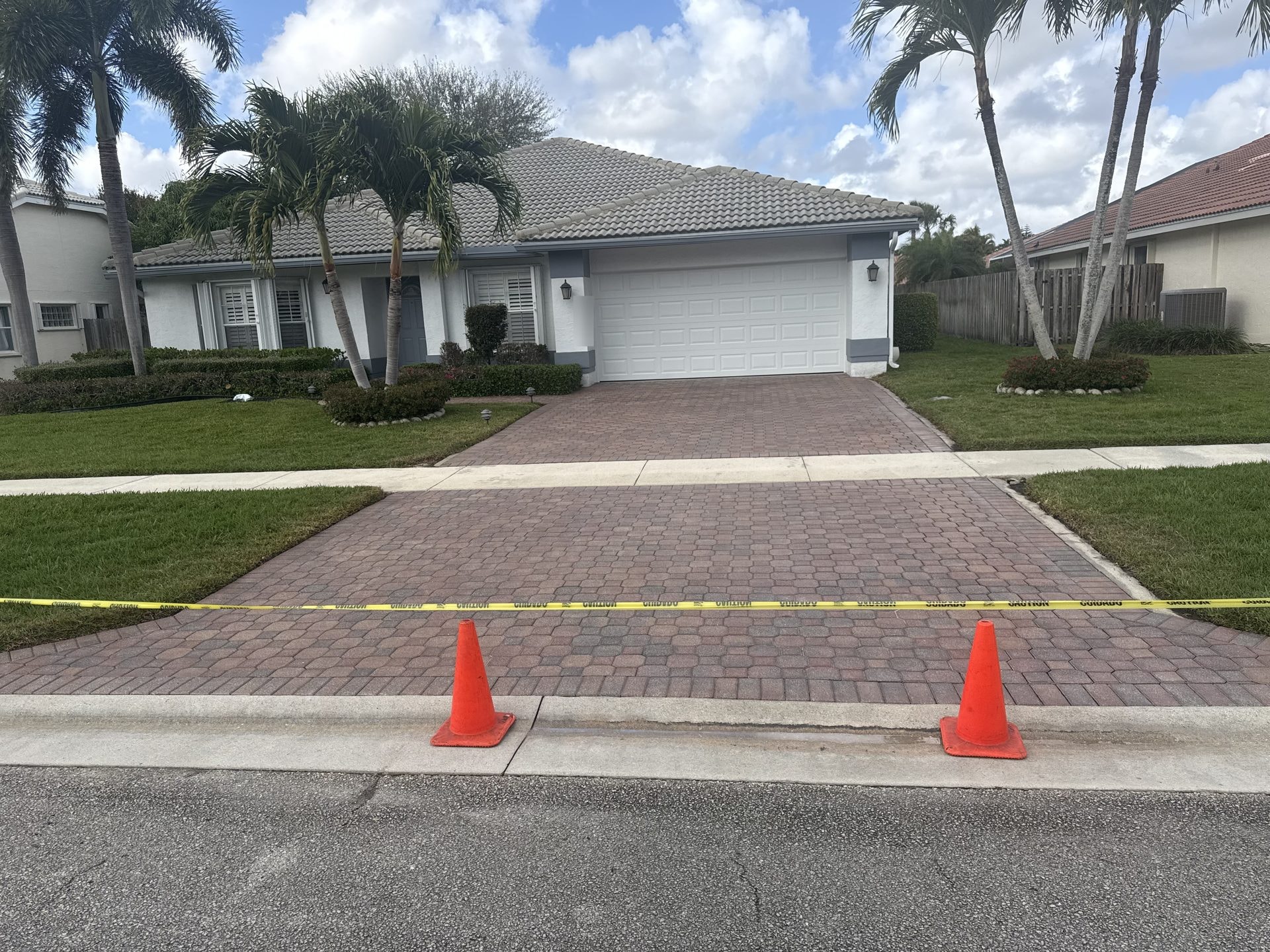
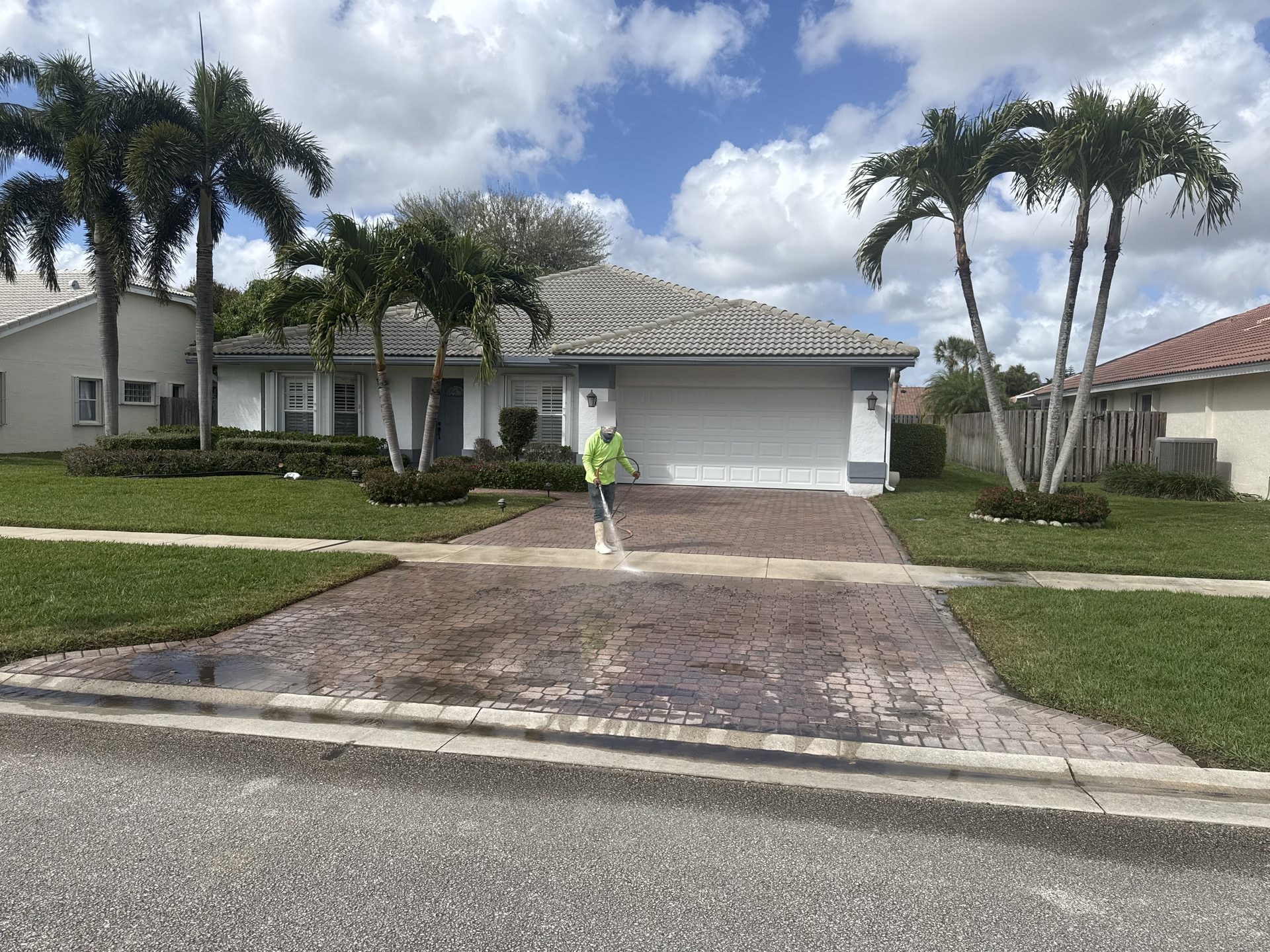
Brick paver driveway pressure washing - Lake Worth, FL
The black streaking on a Lake Worth roof is Gloeocapsa magma, a cyanobacteria rather than dirt or mold. It arrives airborne, settles on a roof that stays damp, and feeds on the limestone filler in shingle and the porous surface of tile. Three things specific to this city accelerate it.
The lagoon. Lake Worth sits against the Lake Worth Lagoon, with the city's barrier island section and municipal beach on the far side. Water on two sides means overnight humidity that does not burn off until mid-morning, plus salt aerosol carried inland on the east wind. Salt is not food for algae, but it is hygroscopic — it holds moisture on whatever it lands on. An east-facing roof plane four blocks off the Intracoastal stays wet longer than the same plane in Greenacres, and it streaks first.
The grid and the canopy. This is not a subdivision. Lake Worth was platted in fifty-foot lots, and Southeast Lucerne was replatted down to twenty-five-foot lots with alleys behind. Houses sit close, the canopy has had a century to close over the street, and there is very little airflow at roof level on an interior block. Shaded tile never fully dries. Walk your own alley and you will see it: the north and alley-facing slopes are dark while the street face looks fine.
Original clay tile. Concrete tile is what the western suburbs have. A good deal of Lake Worth still carries original clay barrel from the 1920s, and unglazed clay is more porous than concrete, not less. It takes on water and holds it in the pan. It is also the tile you cannot replace.
We treat with a low-pressure application and let the chemistry work. Pressure drives water under the laps and beneath the flashing, and on clay it does considerably worse.
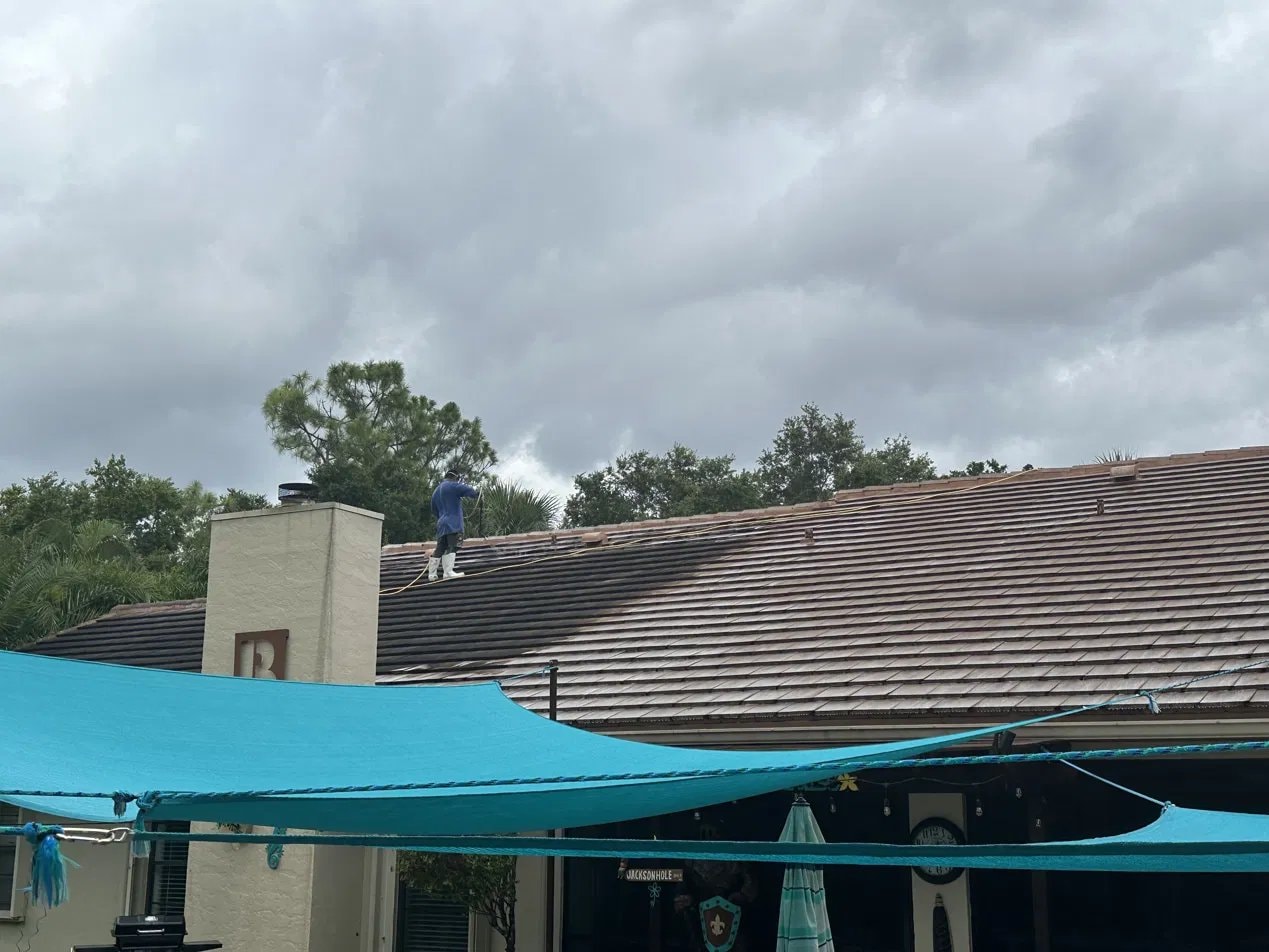
Soft-wash roof cleaning - flat tile roof, Lake Worth, FL
The protection happens first, not as cleanup afterward.
Where a house has gutters, the solution is captured at the downspout into collection bags, so it never reaches the beds. Where there are none — and a great many of the older frame houses here have none — we tarp, and a ground technician wets everything down ahead of the work: plants, walls, windows, anywhere wind could carry the mist. Flowering and sensitive plantings get tarped regardless: hibiscus, bougainvillea, orchids, and the mature crotons that turn up in these older yards.
Lake Worth adds a problem the suburbs do not have: your neighbor. On a twenty-five-foot lot in Southeast Lucerne the property line is a few feet off your wall, and the person next door has orchids under the eave. The wet-down and the tarping extend past your line, and we knock on that door first rather than after.
While the roof is washed, the ground technician works ahead of the drift. That is the entire reason there are two people on a roof job.
Here is the one that costs people real money in this city.
Original clay barrel tile is not replaceable. The Florida Building Code has a section devoted to historic Cuban tile, and it tells you why: when a historic tile roof is worked on, salvaging and reapplying the original tile is preferred over replacement, and where the salvage count comes up short the salvaged tile is used as cap and not as pan. Out of code language: every original tile that comes off your roof broken is a tile that cannot be bought. There is no supplier, only a salvage yard with whatever it has. A crew that walks a hundred-year-old clay roof wrong is not costing you a cleaning. It is costing you tile that no longer exists.
Lime-based and original stucco is soft. Much of the 1920s stock here is stucco over wood lath or masonry, mixed with lime rather than the hard portland-heavy mixes used after the war. National Park Service guidance on historic stucco calls for low-pressure water and soft natural-bristle brushes, and warns that on textured historic stucco it is difficult to remove dirt without also removing part of the decorative surface. A pressure wand does not distinguish between the biofilm and the finish coat. You get a clean wall with the texture gone, and the texture was the historic fabric.
Glazing putty. The original wood double-hungs in the Lucerne districts and South Palm Park are held together with linseed-oil glazing putty eighty to a hundred years old. It is dry and brittle, and pressurized water blows it out of the rabbet. The glass rattles, then leaks, then falls.
Lead paint. Assume lead-based paint under the current coat on anything painted before 1978 — most of the wood trim, soffits, porch columns and siding in the historic districts. Pressure washing is not prohibited under EPA's Renovation, Repair and Painting rule, but it is not unregulated either: the work area has to be contained so dust, debris and wash water do not escape the site, and the wastewater disposed of properly. A contractor blasting a 1926 porch with the runoff going into your beds is not making a technique error. That is chips of lead paint in the soil where your dog is.
And the review comes after, not before. Cleaning a designated property is not a Certificate of Appropriateness item. Roof work, windows and doors, and exterior alterations are — the city's Historic Resources Preservation Board publishes a checklist for each — so damage from a bad wash lands you in a review the wash itself never went near. People find that out in the wrong order.
A historic house can absolutely be cleaned. It gets cleaned with chemistry, low pressure and a plan, by somebody who knows what he is looking at.
Lake Worth driveways are not the suburban paver apron. What is actually out here:
Old poured concrete, often scored and often narrow. It cleans on a rotary surface cleaner, which gives an even finish instead of the zebra striping a freehand wand leaves. On concrete this old the cream layer is already gone in places, so pressure comes down and dwell time goes up. Anyone cleaning your driveway freehand is leaving stripes you will look at for two years.
Brick. Original brick driveways, walks and alley aprons survive in the Lucerne districts. Old soft-fired brick is nothing like modern paver brick — pressure erodes the face and blows out the lime mortar. Treated as historic masonry: low pressure and chemistry.
Pavers, on the newer infill and rebuilt driveways. Joint sand comes out with the dirt. That is physics, not damage, and we tell you before we start whether re-sanding is in your quote or priced separately.
Chattahoochee, on mid-century porches and walks. River pebble set in resin, and pressure strips the stones out of the binder. Soft washed, without exception.
Sealing is a separate conversation. A sealed driveway holds color, resists tannin staining from the canopy and keeps joint sand in place through storm season, but it has to go down on a fully dry, fully cured surface — here, that means watching the forecast rather than the calendar.
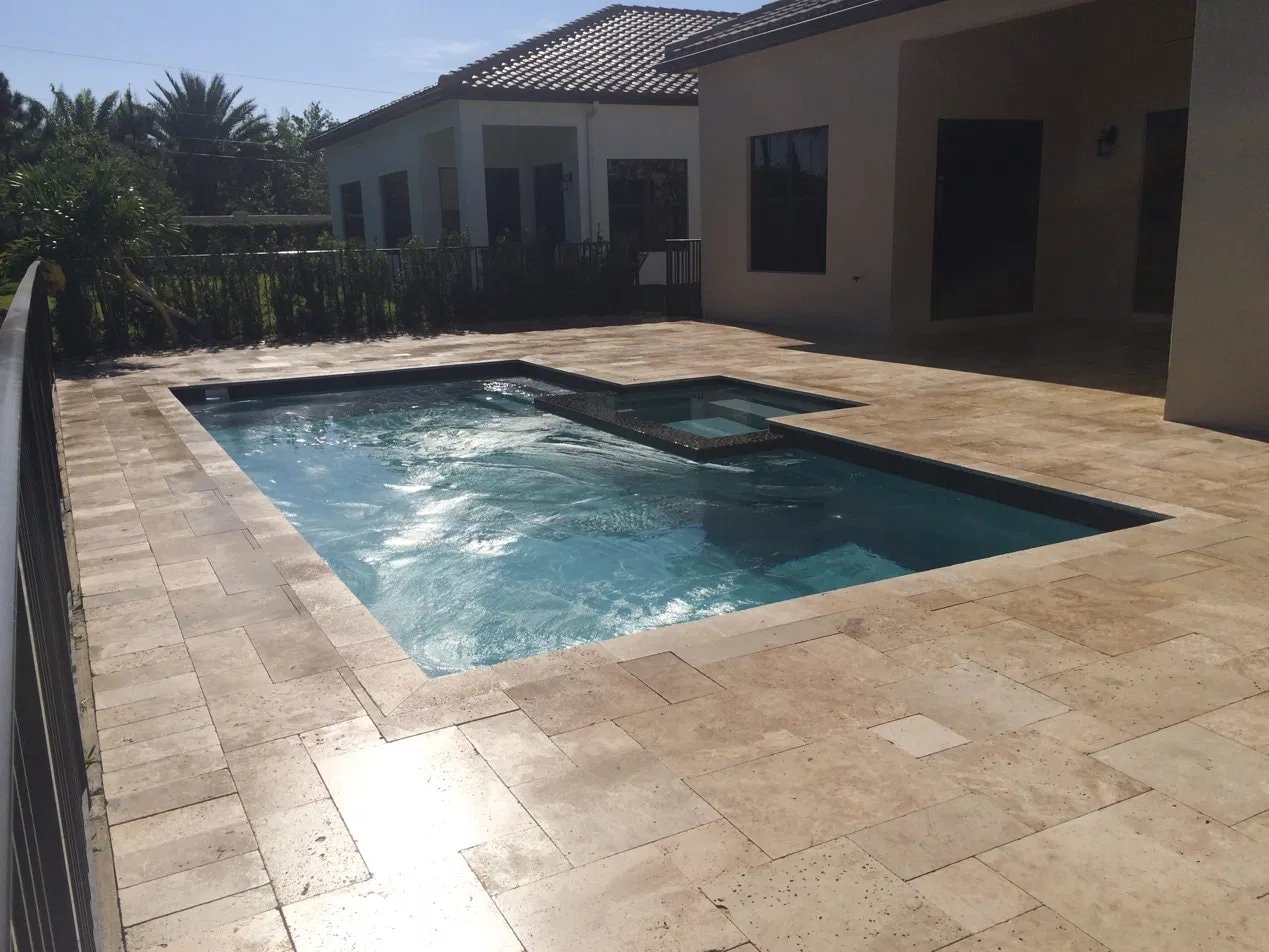
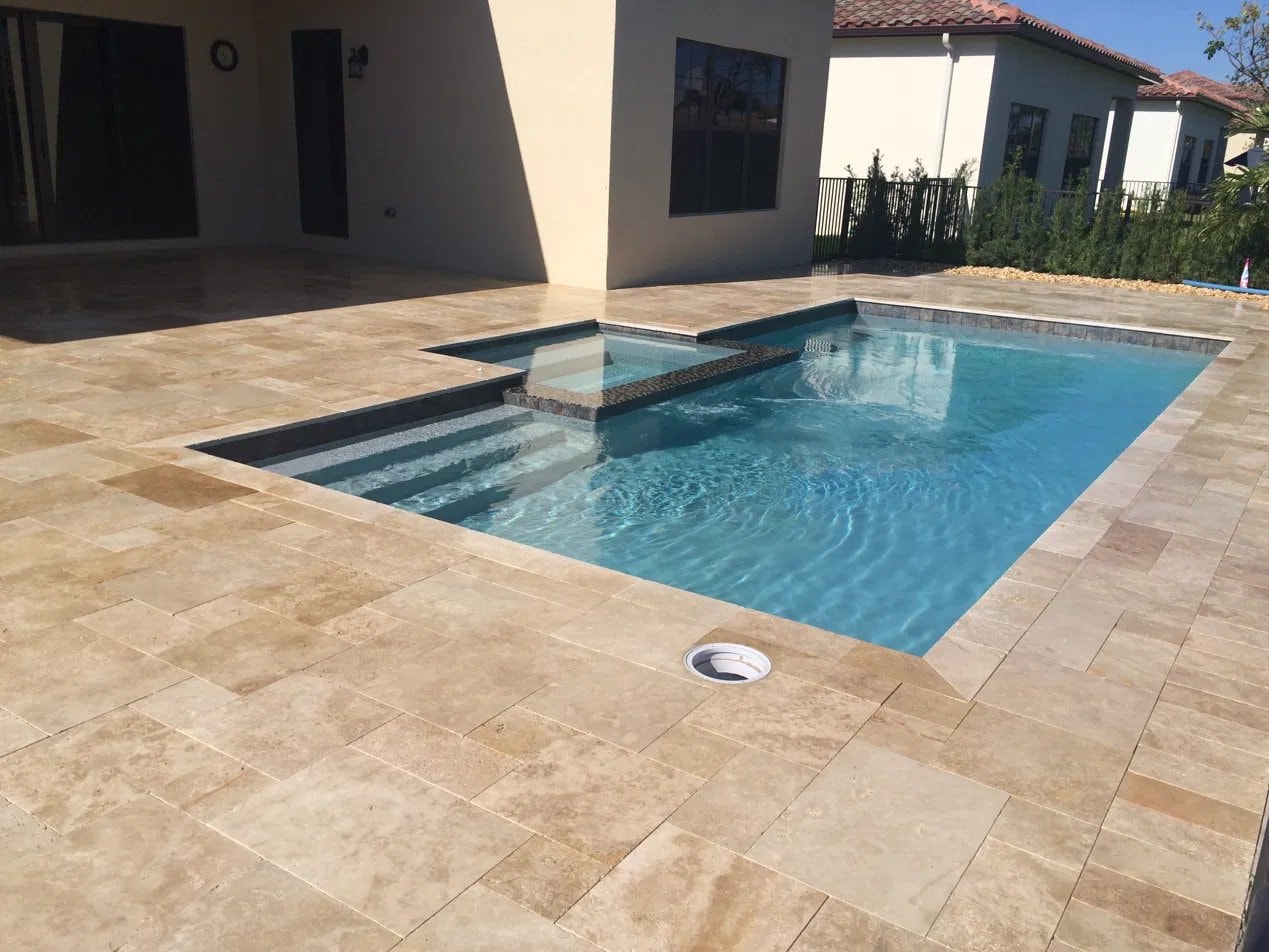
Paver pool deck pressure washing and sealing - Lake Worth, FL
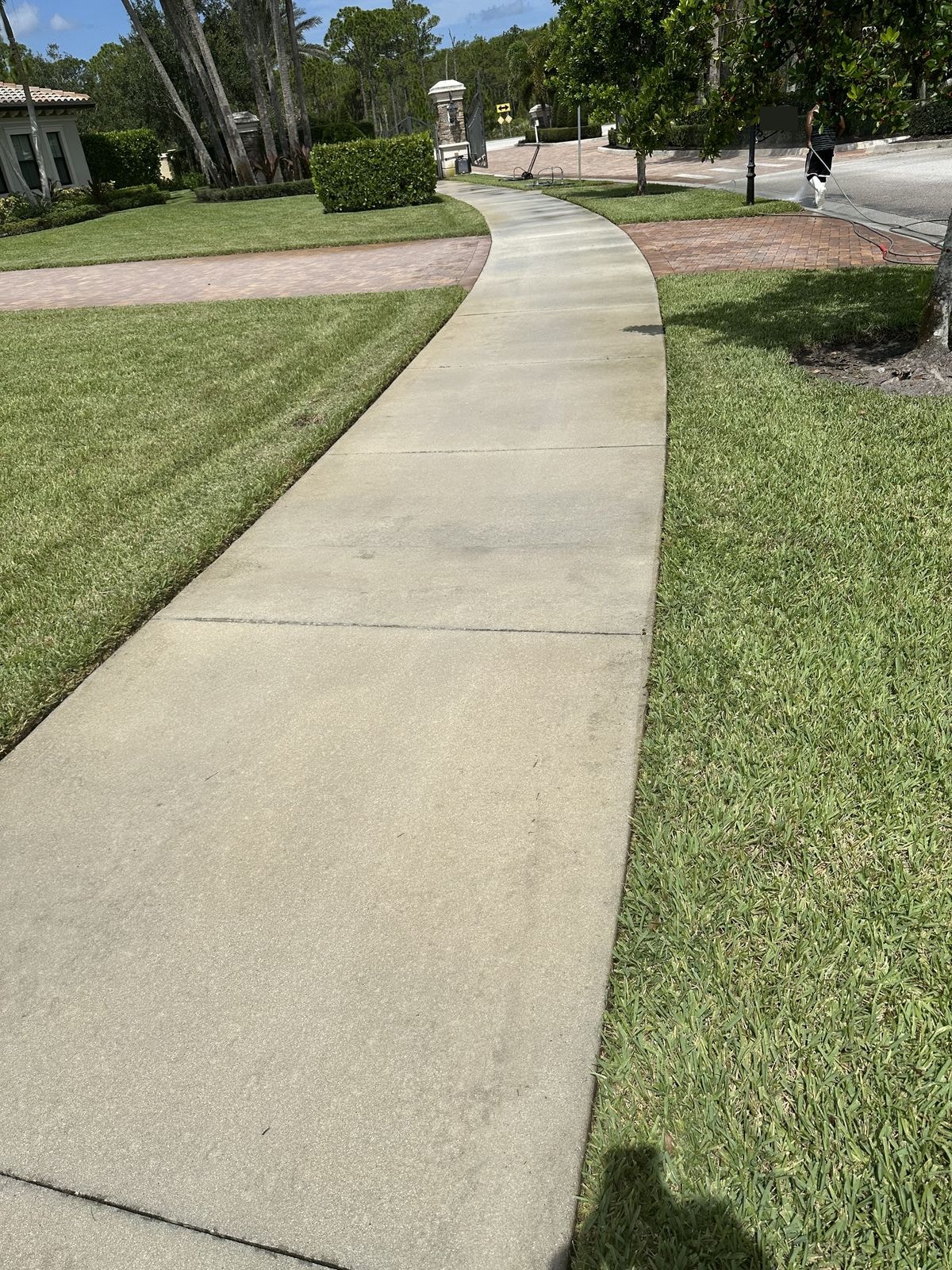
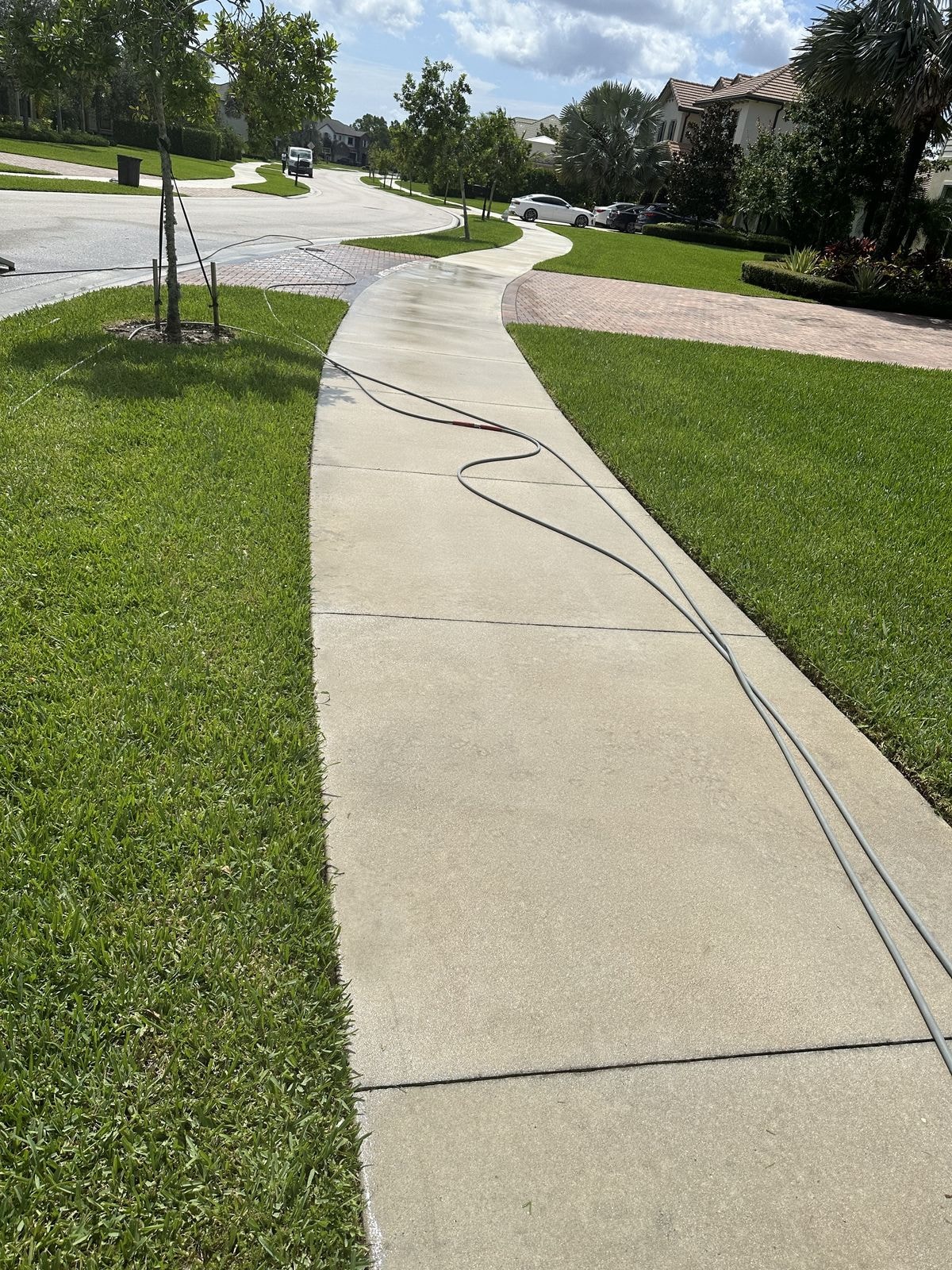
Residential sidewalk pressure washing - Lake Worth, FL
Lake Worth wall construction runs across four eras, and each wants something different.
Wood frame vernacular — the coastal cottages in Old Lucerne, drop siding and clapboard. Low pressure only. Water forced behind wood siding does not evaporate. It sits in the cavity, rots the sheathing, and shows up a year later as a soft spot under the paint.
Original and lime-based stucco, covered above. Soft wash, no exceptions.
Masonry vernacular and 1950s CBS. The postwar ranches are stuccoed block, most of them single-wythe — one block thick, no cavity, no drainage plane behind the finish. There is nowhere for driven water to go except through. You learn about it six months later when the interior paint blisters or a chalky bloom comes through the wall.
Mid-century and later condo stock near the water. Painted concrete, exposed aggregate panels, aluminum railings and window frames chalked white by salt. Soft washed, with the oxidation treated as its own item.
What we watch for on any Lake Worth house wash: soffit and gable vents, because water driven into a vent ends up in the attic; the original wood windows; old exterior fixtures and outlets, which in a 1920s house are frequently not what current code allows; and the north and alley-facing walls, where the mildew lives. The street elevation usually looks fine. It is the shaded side you have not looked at in three years.
Lots here are small, pools sit tucked between the house and the alley, and shade covers the deck most of the day. That grows a thin biofilm that is slick well before it looks dirty. If your deck is slippery after rain, that is algae, and a fall risk rather than a cosmetic issue.
Deck surfaces here skew older than the suburbs: painted concrete, Kool Deck, terrazzo, pavers, original tile. Kool Deck is the one people wreck — a thin textured topping that pressure blows off in sheets, so it gets soft washed, full stop. Painted concrete is the second casualty, because the coating is the surface.
Screen enclosures get frame and screens both. Aluminum oxidizes into a chalky gray film, and screen fabric holds a biofilm that cuts light long before it looks dirty.
Most of Lake Worth predates the HOA. Outside a handful of newer associations and the condo buildings there is no architectural committee sending letters — enforcement here is municipal, and exterior condition is squarely within it. A city notice arrives with a correction window attached, and it is a public record rather than a note from a neighbor. In a designated district, the condition of historic material is also not purely an appearance question.
If a notice is what brought you to this page, say so when you call. We respond to every estimate request within 24 hours, and a deadline changes how we schedule, not what we charge.
This is home. The company has been based in Lake Worth and working South Florida since 2014, and this is the only city on this site where the owner's truck is parked overnight.
That is specific rather than sentimental. Same-day response is realistic here in a way it is not forty minutes west, because we are not driving in. We know which blocks in Northeast Lucerne have alley access and which mean carrying hose through a side yard, which stretch of Lucerne Avenue you cannot stage a truck on during a Friday event downtown, and which streets in the College Park grid are tight enough that the trailer comes in from one particular end.
And we know the housing stock, which is the part that matters. A crew working Wellington and Royal Palm all week is good at concrete tile, painted stucco, pavers and screen cages, because that is what is out there. It has no reason to have ever thought about lime stucco, soft brick, putty glazing or salvage-only clay tile. Lake Worth is a hundred-year-old city with a mid-century city inside it and a waterfront condo city on its edge, and doing this work properly means knowing which of the three you are standing in front of.
One more thing. Lake Worth Road comes in from the western suburbs, crosses I-95, splits into Lake Avenue eastbound and Lucerne Avenue westbound through downtown, crosses the Intracoastal and ends at A1A a block from the ocean. Every era this city ever built sits on that one line, in order, and salt exposure climbs the whole way east. A property four blocks from the bridge is not on the same cleaning interval as one out by the interstate.
The commercial work here sits on a handful of corridors.
Downtown — Lake Avenue and Lucerne Avenue. Roughly sixteen acres of historic storefronts, sidewalk dining and apartments over retail. Awnings, sidewalks, storefront glass and painted facades, all after hours, because there is no hour of the day when a downtown sidewalk is empty and nothing should be dripping near a table. The facade itself may be historic fabric, handled the way a historic house is.
Dixie Highway, Federal Highway and Lake Worth Road. The mixed commercial spine — auto, service, offices and strip plazas. Concrete, painted CBS, awnings, dumpster pads and drive lanes, plus road-film staining that residential streets never get.
Multi-family and condo associations, particularly toward the Intracoastal. Walkways, stair towers, garages, railings and building exteriors, usually on a standing schedule so it happens without a board having to remember to call.
Post-construction covers new builds and the renovation constantly under way in the historic districts: the dust, mortar splatter and adhesive a final clean does not touch.
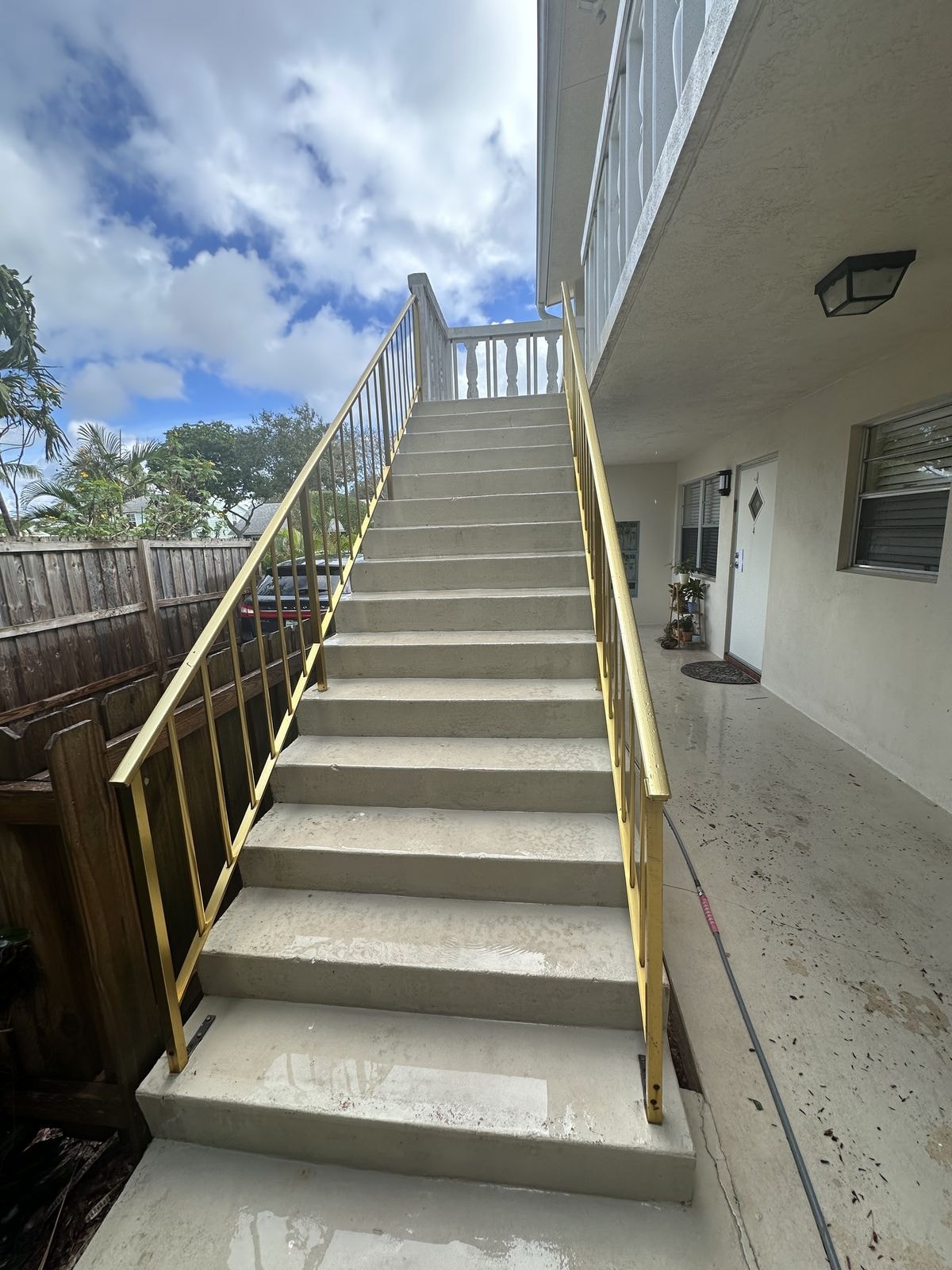
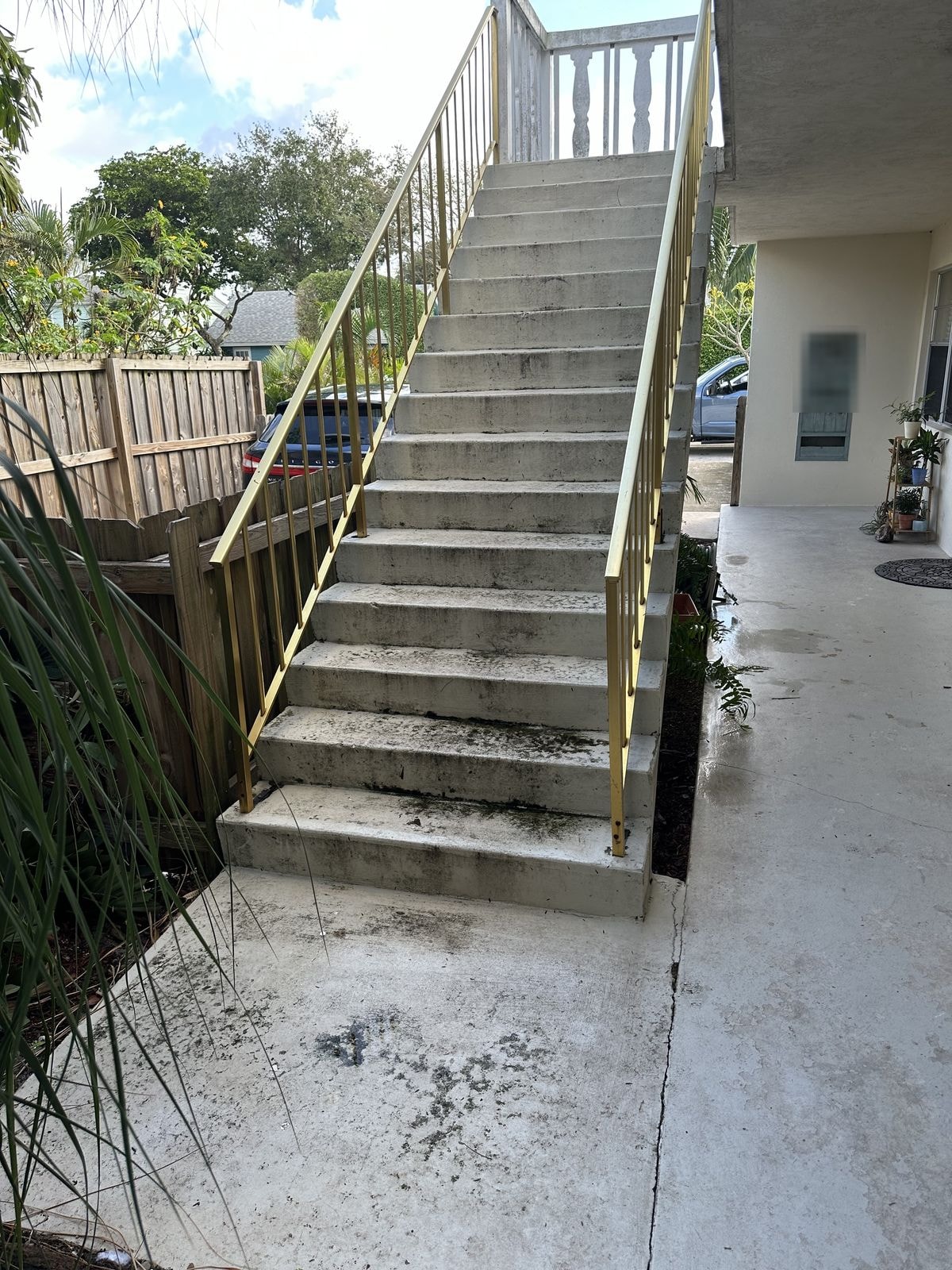
Concrete stair pressure washing - Lake Worth, FL
College Park, Old Town, Old Lucerne, Northeast Lucerne, Southeast Lucerne, South Palm Park, Parrot Cove, Mango Groves, Tropical Ridge, Royal Poinciana, Sunset Ridge, Vernon Heights, Eden Place, Bryant Park, Murray Hills, Genesis, S.O.S.A. and the Intracoastal condo buildings.
If your neighborhood is not on that list, it does not mean we do not serve it. Call and ask.
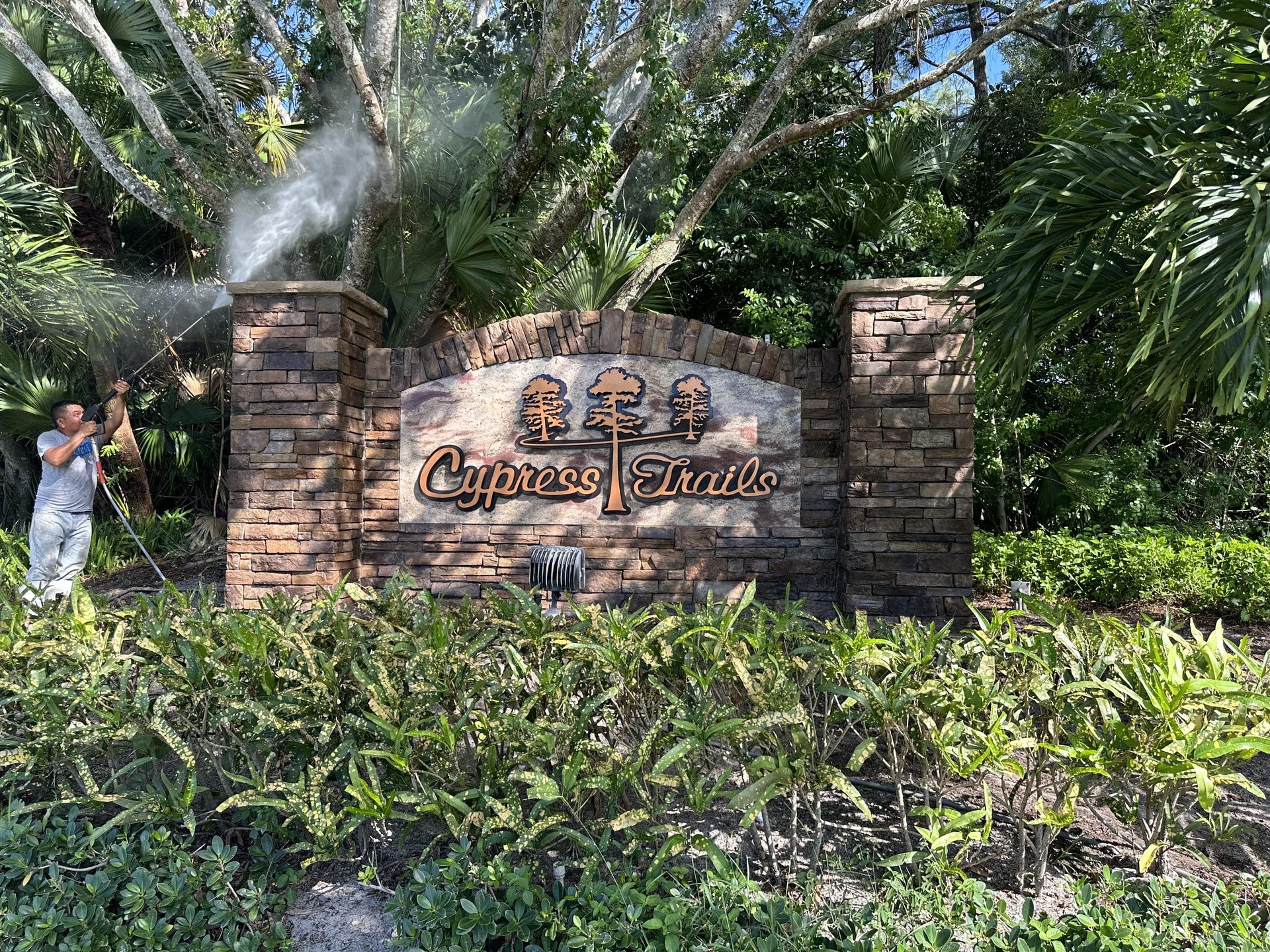
HOA entrance monument soft wash - Lake Worth, FL
October through December is the right window for most Lake Worth properties. Dry season is beginning, the surface stays clean longer afterward, and you are ahead of both the holidays and the downtown season, when staging a truck near Lake and Lucerne gets difficult.
Intervals here run shorter than inland. Most of the county runs eighteen to twenty-four months between tile roof cleanings. Closer to the lagoon, on a shaded interior block or under a closed canopy, twelve to eighteen is more realistic. Driveways, walks and pool decks go annually, or every six months under heavy shade. Condo and multi-family common areas do best semiannually.
If the property is designated and you are planning painting, window work or a reroof, clean first. A dirty surface hides what the specification has to account for.
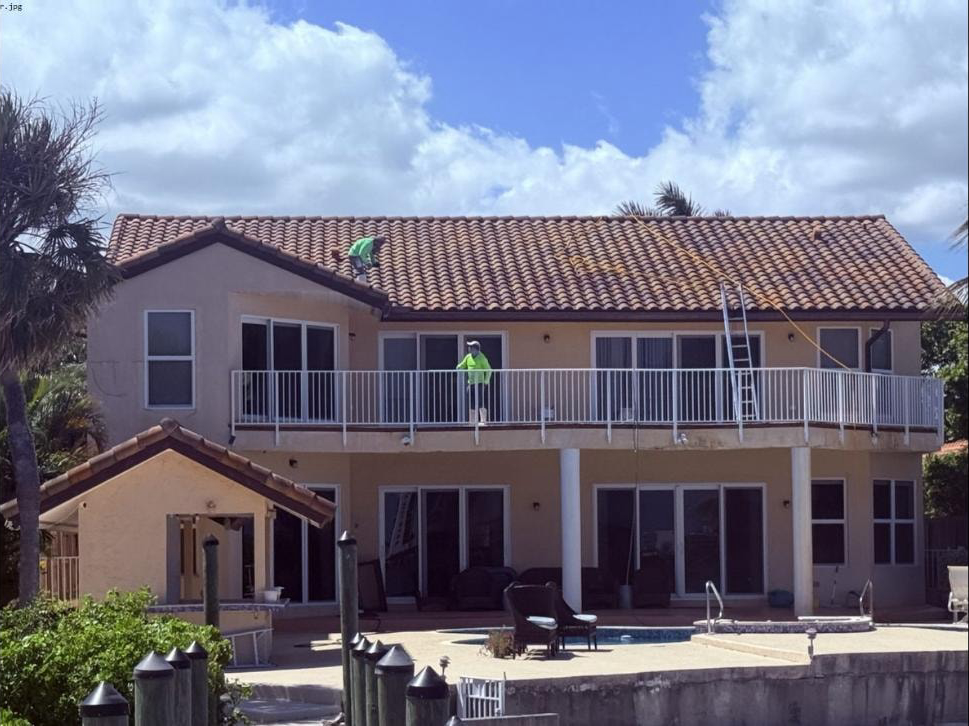
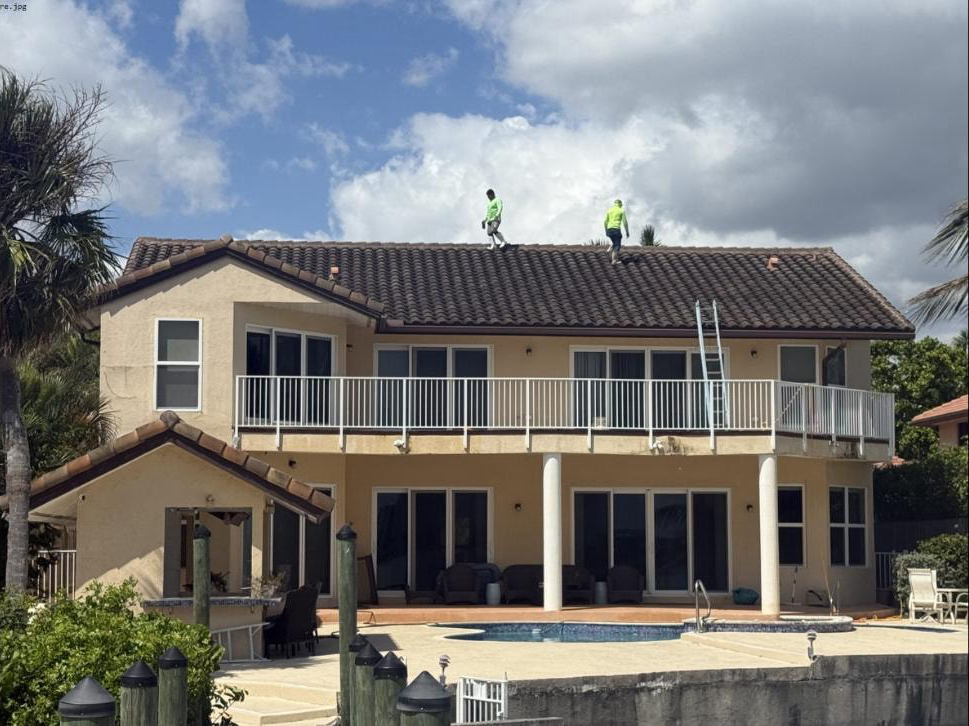
Soft-wash roof cleaning - barrel tile roof, Lake Worth Beach, FL
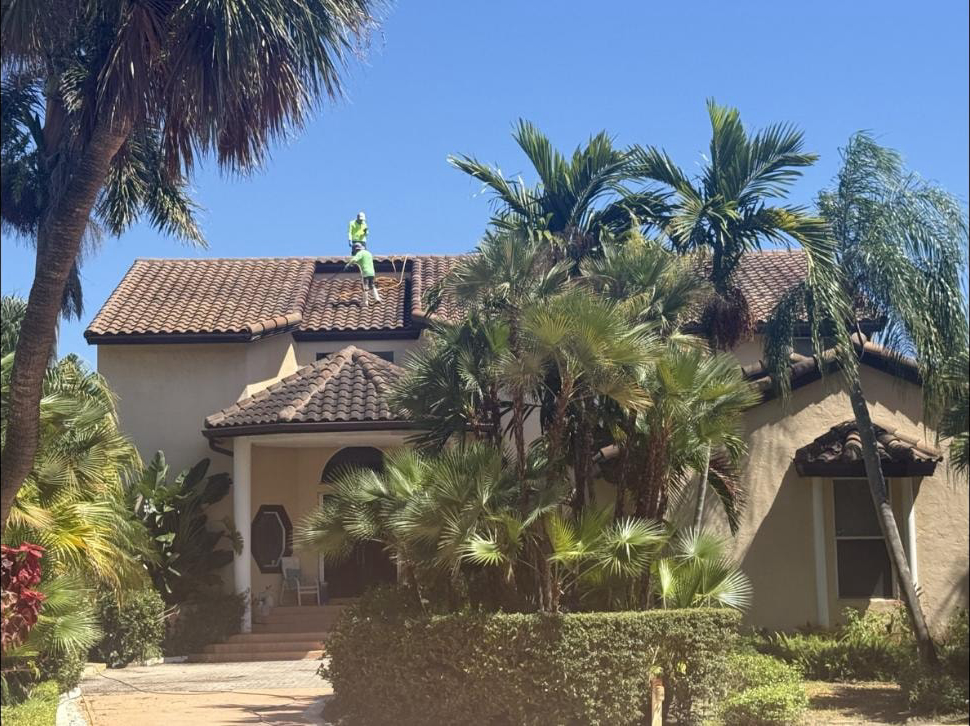
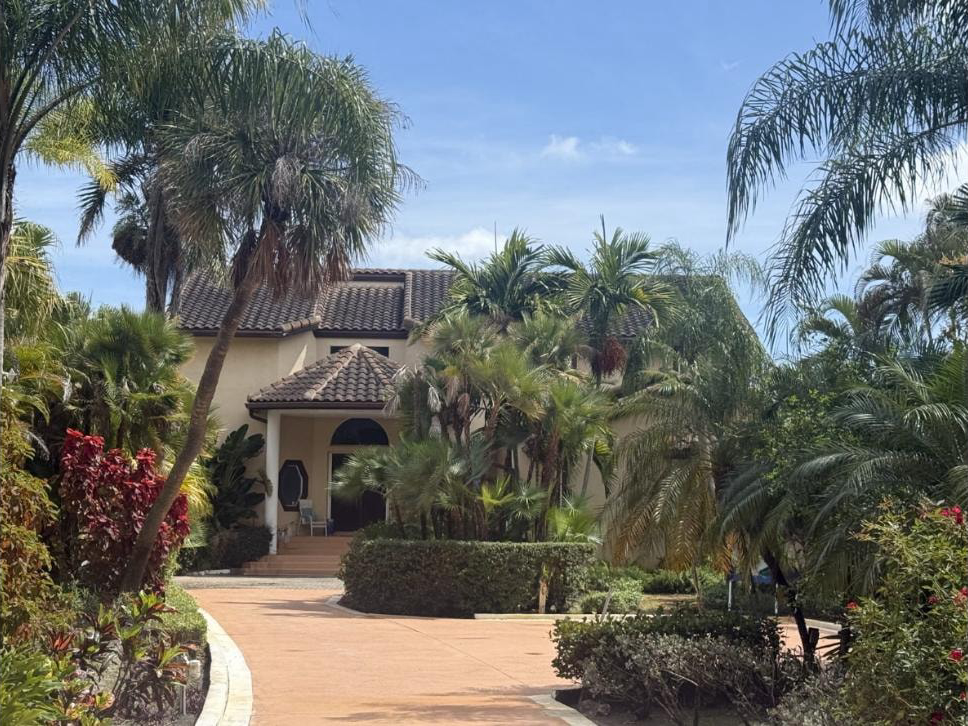
Soft-wash roof cleaning - front entrance, Lake Worth Beach, FL
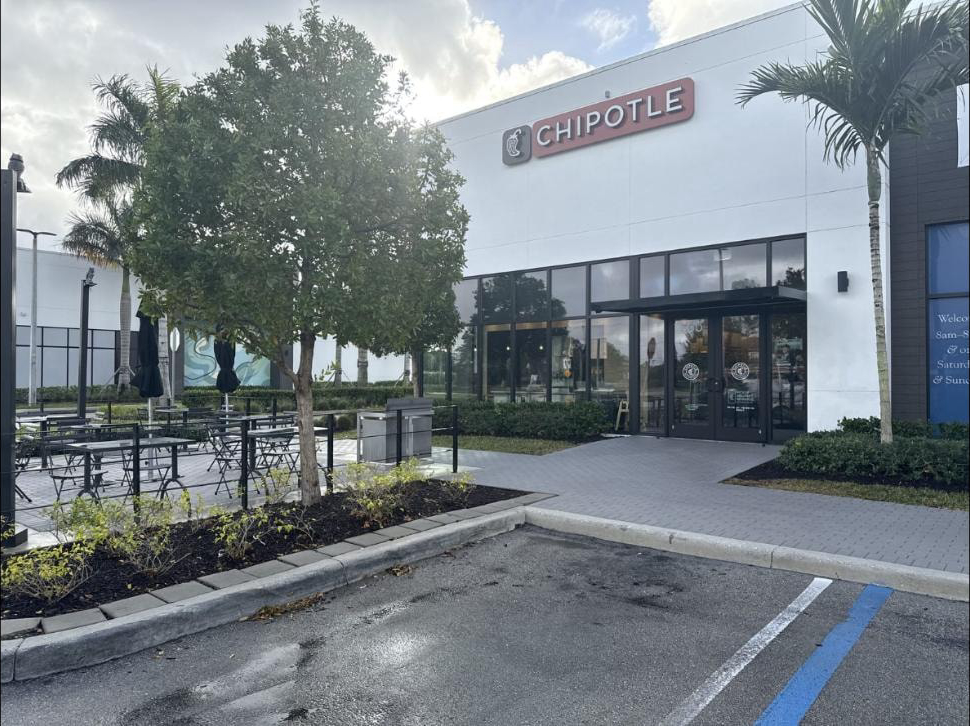
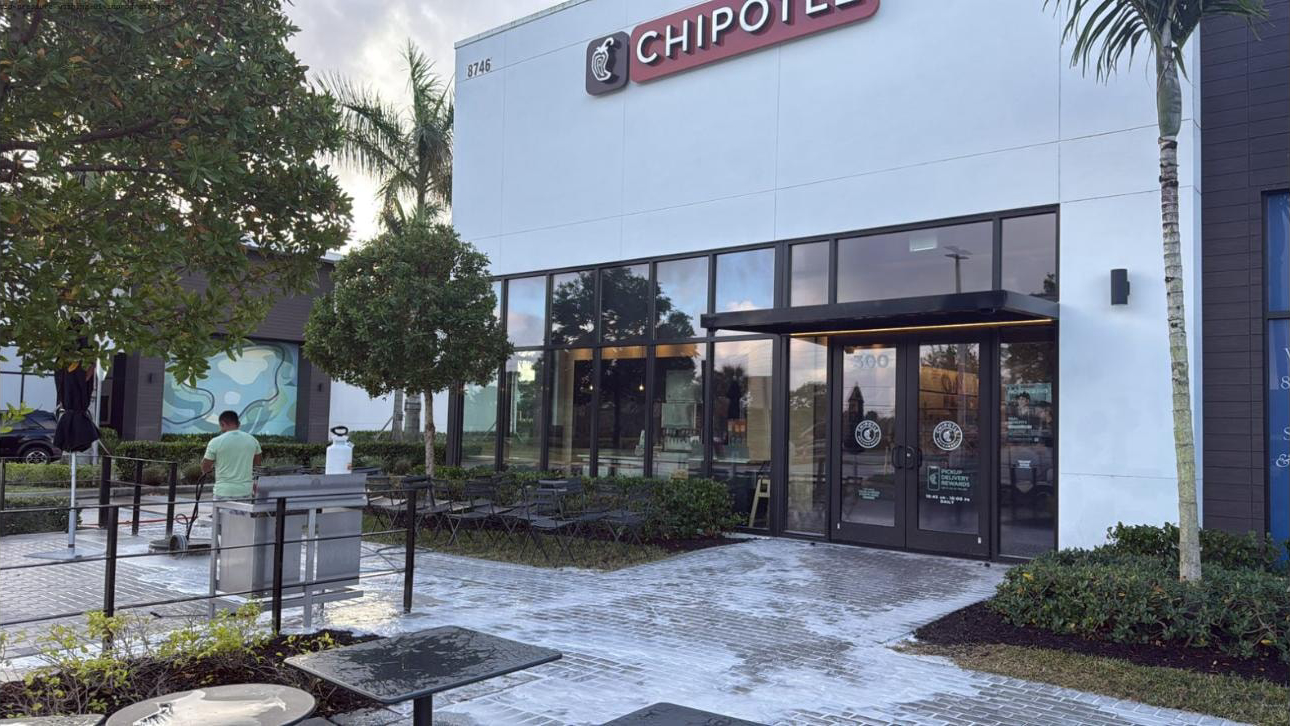
Restaurant patio and entrance pressure washing - Lake Worth, FL
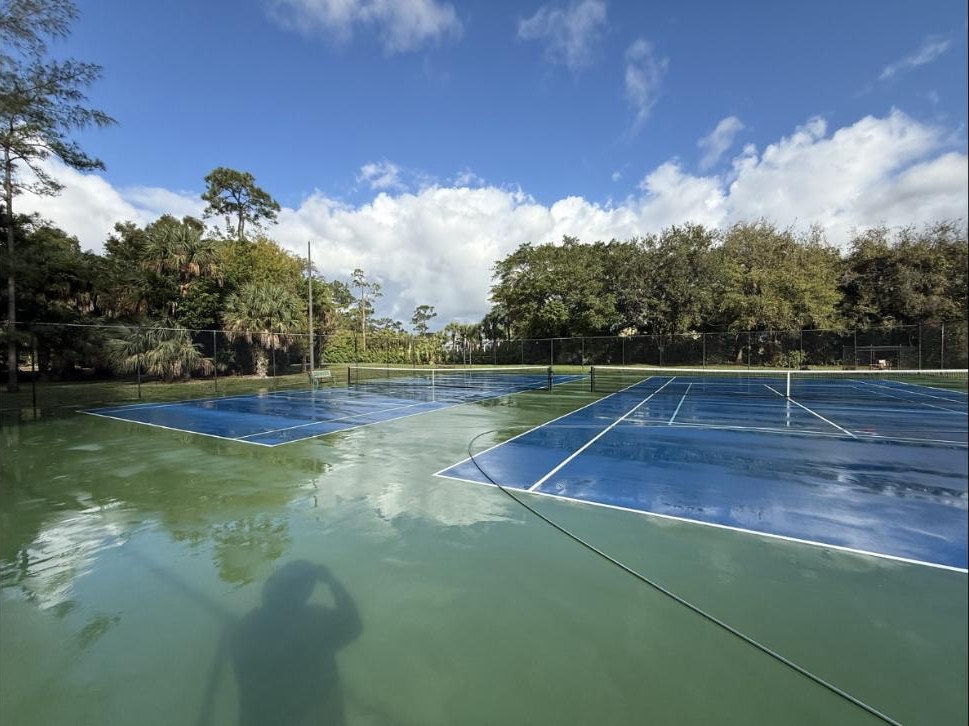
Tennis and pickleball court pressure washing - Lake Worth, FL
Licensed, Bonded and Insured. BTR #201578066. ThePressureCleaningPeople.Com LLC is an affiliate of Thomas R. Scott GC Inc. (Lic# CGC006883).
Call (561) 907-1333. Every estimate request gets a response within 24 hours.
Original clay barrel tile, concrete tile, shingle and flat roofs cleaned by low-pressure chemical application. Removes algae, mold and lichen without breaking tile that cannot be replaced.
Historic stucco, frame vernacular siding and CBS walls cleaned gently. No high-pressure blasting that strips finish or forces water into single-wythe block.
Interior and exterior window cleaning, including original wood sash handled without disturbing aged glazing putty.
Pool cage and lanai screens cleaned of algae, dirt and aluminum oxidation.
Concrete, brick, paver and Chattahoochee driveways, walks, alley aprons and pool decks, cleaned at the pressure the surface can take.
Irrigation, furniture and hardware staining lifted from concrete, pavers and stucco without damaging the surface underneath.
Vinyl, wood and aluminum fences cleaned of algae, mold and weathering.
Gutters and downspouts cleared, and exterior gutter faces cleaned of algae streaking and staining.
Roof Cleaning in Lake Worth
Soft-wash tile and flat roof cleaning
House Washing in Lake Worth
Exterior wall and stucco cleaning
Screen Enclosure Cleaning in Lake Worth
Pool cage and lanai screen cleaning
Driveway & Walkway Cleaning in Lake Worth
Paver and concrete pressure washing
Sidewalk & Swale Cleaning in Lake Worth
Concrete sidewalk and drainage swale washing
Sports Court Cleaning in Lake Worth
Tennis, pickleball, and basketball court washing
Fence Cleaning in Lake Worth
Soft-wash cleaning for vinyl, aluminum, and wood fencing
Gutter Cleaning in Lake Worth
Interior clearing plus exterior soft-washing
Post-Construction Cleanup in Lake Worth
Mortar, overspray, and construction debris removal
We respond to every estimate request within 24 hours. Call (561) 907-1333 or fill out the form below.